
AI Marketing for Eye Care Practices: 9 Ways to Grow Your Practice
Most optometrists and ophthalmologists who say they use AI have automated exactly one thing: writing a few social media captions or generating a monthly email template. That is not an AI marketing strategy. It is a single task handed off to a tool while the rest of the patient journey stays entirely manual, inconsistent, and easy to lose to a competitor who built something with more intent.
Eye care is a business built on relationships and annual cycles, recurring conditions, and patients who trust your practice with something as valuable as their vision. The practices achieving consistent growth right now are not chasing every new AI feature. They are using artificial intelligence to build a connected system that spans the full patient lifecycle, from the first local search that helps patients find them, to the patient communication efforts that bring patients back year after year.
This guide covers nine specific ways to apply AI marketing for eye care practices, with clear direction on what each strategy actually does, where it fits in a real clinical workflow, and what compliance standards need to be considered before any patient outreach can be started.

AI Marketing in Eye Care: What It Actually Is
Before getting into the nine strategies, a clear line needs to be drawn between two things that frequently get treated as equal. Narrow AI tools, including ChatGPT, Jasper, and scheduling assistants, handle individual tasks. They write, organize, or respond, but they do not connect to each other, share data across systems, or function as a unified growth engine.
An AI native GTM approach (Artificial Intelligence Go-To-Market) operates at a different level entirely. It means structuring your practice’s strategy around automation and patient data from the start, not adding a chatbot onto a website that was already underperforming and calling it an AI marketing plan. That distinction matters because isolated tools produce isolated results, while a connected system builds compounding returns across every stage of the patient relationship.
Eyecare operates on a built-in recurring structure that AI systems are well-suited to support. Contact lens wearers return annually. Diabetic patients need consistent retinal monitoring. Dry eye patients cycle through treatment protocols that require ongoing communication and engagement between visits. That repeating pattern is precisely what practice management systems and AI marketing infrastructure are designed to serve together.
The goal is not to replace clinical judgment. No artificial intelligence tool replaces an OD’s assessment or a surgeon’s operative plan. What AI replaces is the manual, inconsistent, staff-dependent work that happens outside the exam room: discovery, booking, recall, retention, and reputation building. That is where AI marketing earns its place in the operations of an optometry practice.
9 Ways to Grow Your Eye Care Practice with AI
1. Turn Website Visitors Into Booked Appointments

Your website receives two fundamentally different types of visitors, and most eye care practices handle both identically. An existing patient looking to refill contact lenses needs a completely different path than a new patient who landed on your site after searching for a dry eye specialist in their area.
AI chatbots and conversational tools make that distinction in real time. A new patient gets immediate engagement, receives answers about services and availability, and moves toward scheduling without waiting for your front desk to open. An existing patient gets routed to the appropriate request form without navigating through pages that were built for someone who has never visited your office.
Specialty practices benefit most from this setup. A LASIK center or cataract surgery provider sees visitors who arrive already motivated but carrying clinical questions about candidacy, recovery time, and what to expect. An AI lead generation tool trained on your specific services, your physicians’ credentials, and your scheduling parameters can move that visitor toward a consultation appointment more consistently than a static contact form ever will. In one case study, a practice reported a 35% increase in lead capture and a 25% increase in bookings after deploying a chatbot.
One limitation deserves honest acknowledgment here: a generic chatbot creates friction rather than conversion. If your AI setup cannot answer the actual questions your eye care patients ask, it becomes an obstacle rather than an asset. Effective implementation requires configuration specific to your services and clinical focus, not an off-the-shelf deployment with placeholder text.
2. Win Local Search Before Patients Choose Someone Else
For the overwhelming majority of optometry and ophthalmology practices, local search is where patient acquisition begins. When someone searches for an eye doctor, they have already decided to schedule an appointment and are evaluating who to contact first.
Two specific shifts in how AI tools approach local SEO are worth understanding. The first is automation of routine Google Business Profile tasks: publishing service updates, responding to questions, scheduling photos, and keeping the practice information current without requiring staff attention each week. The second is content generation at a scale that targets location-specific keywords across multiple search intents, something that was previously only achievable with a dedicated agency or content team.
Google’s AI Overviews pull from GBP data, website content, and reviews when generating local answers to patient queries. An active, complete profile feeds those systems directly. A profile that has gone untouched for several months does not, and the visibility gap between those two scenarios is measurable in both impression volume and patient acquisition. Maintaining your GBP is no longer a nice-to-have for optometry practices in competitive markets; it is the baseline.
One compliance rule applies regardless of which AI tools you use for local visibility: never include patient names, clinical conditions, or identifiable case information in GBP posts or review responses. Even a general reference that implies a patient relationship can create HIPAA exposure. Keep all GBP content focused on services and clinically general in tone.
3. Build Search Authority Without Burning Out Your Staff
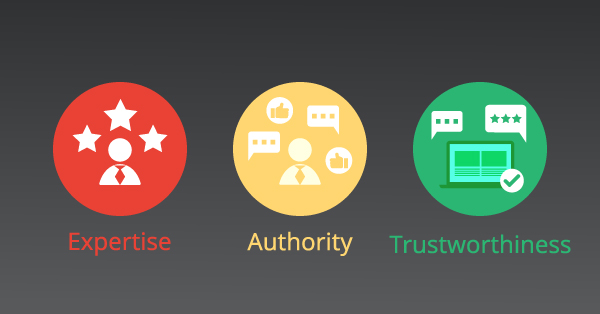
Eye care practices sit on a significant amount of untapped topical authority that most have never converted into discoverable content. Myopia management, diabetic retinopathy monitoring, dry eye disease treatment, contact lens fitting for specialty cases, preoperative and postoperative cataract education: patients search for this information regularly, and the practice that provides accurate, clearly written answers earns both their trust and their appointment.
AI writing tools accelerate content production for optometrists and ophthalmologists who know the subject matter but cannot find the hours to write it out. A tool like Jasper, Copy.ai, or Writesonic generates a working first draft of a patient education page or blog post in minutes. That draft then goes to an OD or ophthalmologist for clinical review before it is published. Clinical oversight is not a workaround; it is a professional standard that responsible content marketing in eye care should always include.
Dr. David Kading, OD, FAAO, described a practical workflow for this in Optometric Management in October 2025. He recommended defining your specialty focus, providing that description to the AI platform, requesting a full year of marketing content mapped to monthly action steps, and then drilling down into each content category individually. The output still requires your clinical eye before patients see it, but the productivity difference compared to writing everything from scratch is substantial for a practice managing a full patient schedule.
Where AI content tools fall short is equally important to understand. State-specific scope of practice knowledge does not translate well to AI-generated output. HIPAA-sensitive scenarios require human review. Anything involving a specific patient interaction or clinical case stays entirely off the AI-assisted content list. Within those clear limits, however, the impact on digital marketing and content authority for optometry practices is both real and sustainable.
4. Reach At-Risk Patients Before They Leave

Predictive analytics in eye care marketing uses patient data patterns, specifically visit history, purchasing behavior, condition profile, and demographic signals, to forecast which patients are likely to disengage before they actually stop returning. This differs from a standard reminder system in a fundamental way: reminders fire on a fixed calendar regardless of individual patient behavior, while predictive models fire based on each patient’s specific signals and risk profile.
The highest-value applications in optometry cluster around three scenarios. The first is identifying when a contact lens patient approaches their reorder window and triggering outreach before they place that order with an online retailer. The second is flagging patients with diabetic diagnoses who are nearing their overdue threshold for retinal screening. The third is noting when a patient who has completed cataract surgery has not returned for a scheduled follow-up visit, which creates both a clinical concern and a relationship risk.
For ophthalmology practices, the same predictive logic surfaces surgical candidates within your existing patient base. A patient who has attended annual exams for several years and has documented lens changes at age 68 is a cataract surgery candidate that your billing data already knows about. AI surfaces that signal so your staff can act on it systematically rather than relying on a provider to remember it from one appointment to the next.
One honest caveat applies directly: predictive analytics tools require clean data to produce reliable output. If your practice management system carries incomplete records, inconsistent diagnostic coding, or outdated contact information, the model reflects those gaps. Getting your patient database into a reliable state before adding any predictive layer is a prerequisite for accuracy, not an optional upgrade.
5. Bring Lapsed Patients Back Automatically
Patient retention is the most consistently underfunded area of marketing in eye care, and the economics explain why that is a costly oversight. Keeping an active patient returning to your practice costs a fraction of what acquiring a new one requires, yet most practices direct the majority of their marketing budget toward acquisition and very little toward the patients already in their system.
AI automation addresses retention by running recall and reactivation sequences in the background without requiring staff to initiate individual outreach for each patient. An annual exam recall fires based on the last visit date. A post-appointment message goes out within 24 hours of a patient leaving your office. A reactivation sequence launches automatically for anyone who has not visited in 18 months or more. Each of these triggers runs on its own after the initial setup is complete.
What separates an automated reminder from a real retention campaign is what the patient actually receives. A reminder tells someone their appointment is overdue. A retention campaign delivers something worth reading, whether that is a seasonal tip about UV protection, an update about a new dry eye treatment protocol your practice added, or information about myopia management options relevant to a parent in your patient database. That kind of communication keeps your practice relevant between clinical visits, not just at recall time.
Managing this outreach across channels matters because your patient base is not uniform. Younger adult patients respond well to SMS. Older demographics often engage more consistently with email and, in some markets, direct mail. AI platforms handle the channel logic from a single configuration, so your team stays focused on the patients who are currently in the office.
6. Get More Reviews With Less Staff Effort

New patients comparing two optometry practices with similar locations and clinical offerings almost always choose the one with more reviews, even when the less-reviewed practice has stronger credentials. This is not a criticism of patient judgment. It accurately describes how trust works in local digital marketing, and your review volume directly affects both patient acquisition and your position in local search results.
AI reputation management tools solve the solicitation problem by automating the request at the moment patients are most likely to respond: shortly after their appointment, while the experience is still fresh. A text or email goes out automatically, the patient taps through to leave a review, and your staff never has to remember to ask. Practices using systematic automated review solicitation typically see monthly review volume increase by three to five times.
Responding to reviews also carries weight for both SEO and patient trust, and AI can draft those responses at scale. The binding constraint in eye care is HIPAA. A review response from an optometry practice cannot confirm that the reviewer is a patient, reference any clinical condition, or include any information tied to a specific person’s health history, even if the patient voluntarily shared that information in their own public review. AI tools built on HIPAA-compliant response templates handle this correctly; general-purpose writing tools frequently do not.
Building review volume consistently over time outperforms chasing a perfect score. A practice with a 4.6 average and 350 reviews on Google performs better in local visibility and new patient trust than a practice with a 5.0 average and 12 reviews. Distribute your reputation management efforts across Google, Healthgrades, and Zocdoc, and measure success by volume and response rate rather than by star rating alone.
7. Send Campaigns That Match Each Patient’s Situation
A back-to-school eye exam campaign broadcast to your entire patient list is relevant to roughly a third of the people who receive it. For everyone else, it is noise that competes for attention with content that actually applies to their situation. AI segmentation reframes how campaigns reach patients entirely, routing the right message based on what your practice already knows about each person.
Your patient database contains meaningful signals that most eye care practices never activate for digital campaigns. Contact lens wearers and spectacle-only patients have different communication needs and different renewal timelines. Patients being monitored for glaucoma need different content than parents managing a child’s myopia progression. Adults in their 60s who have attended consultations about lens options represent a distinct segment from a patient who came in once and has not returned.
AI tools handle the segmentation logic and message routing based on criteria your practice management system captures in the course of normal operations. A dry eye patient receives a sequence tied to treatment adherence and seasonal triggers during high-pollen months. A contact lens wearer gets timely outreach about prescription expiration before they look elsewhere for a reorder. A patient who has completed cataract surgery receives recovery guidance and a satisfaction check at an appropriate interval after the procedure.
The practical takeaway about patient engagement campaigns is this: adding a first name to a subject line is not personalization. That has been table stakes in email marketing since the early 2000s and generates no meaningful lift on its own. Genuine personalization means the body of the message is relevant to where that specific patient currently sits in their care relationship with your practice, and AI makes that level of targeting achievable at full list scale.
8. Get Recommended by ChatGPT and Google AI

As of 2026, roughly 15 million US adults use an AI engine as their primary search tool. When a patient asks ChatGPT or Google AI Mode to find a dry eye specialist nearby, the engine synthesizes an answer and cites specific sources. Generative Engine Optimization, known as GEO, is the practice of structuring your content so that your practice is one of those sources.
For eye care practices, GEO means service pages where the patient’s question gets answered at the top of the page, structured FAQ sections on high-intent pages, a complete and current GBP, and physician credentials documented clearly on your site. AI engines need to find a clean, direct answer quickly. Bury it in context-setting paragraphs, and the citation goes to someone else.
Third-party validation also plays a significant role. AI engines favor content cited in authoritative sources, so getting a physician mentioned in publications like Optometric Management, covered in AOA materials, or included in regional health journalism increases your probability of appearing in AI-generated answers. That external presence is a core part of building an AI native GTM strategy.
The core difference between SEO and GEO is this: SEO earns a position on a ranked list of links. GEO earns a place inside the answer that a patient reads without clicking anywhere. Both matter for patient acquisition in 2026, and both require distinct content approaches to sustain.
9. Fix Revenue Leaks That Limit Your Marketing Budget
Billing accuracy and marketing capacity are more connected than most eye care practices realize. A practice that consistently loses revenue to denied claims or coding errors has fewer resources to invest in campaigns and content, and that shortfall compounds over time.
AI in billing reduces claim denials by identifying errors before they reach the payer. Eye care coding carries real complexity: selecting the correct codes for a glaucoma suspect differs from confirmed open-angle glaucoma, diabetic retinopathy claims must align with examination level and findings, and keratoconus carries multiple staging codes that affect reimbursement. Undercoding leaves revenue uncollected; overcoding creates audit risk. AI catches these inconsistencies consistently across every claim.
Scheduling automation addresses a related form of revenue loss. A practice at 60 percent chair utilization carries the same overhead as one at 85 percent but with far less to reinvest in growth. AI scheduling reduces no-shows, surfaces gaps early enough to fill them, and keeps provider time from going unused.
The marketing connection is direct: practices that fix revenue leakage first have more stable budgets to invest in digital marketing consistently. Inconsistent investment produces inconsistent results. Addressing both operational and marketing efficiency with AI creates the foundation that sustainable growth requires.
What You Must Know Before Any AI Tool Touches Patient Data
Eye care practices are covered entities under HIPAA, which means every marketing tool that interacts with patient data must meet the same Privacy Rule and Security Rule standards as your clinical operations. Many AI marketing platforms request access to patient lists for segmentation, and that access creates legal obligations before any campaign launches.
Any vendor whose tools access patient names, contact details, appointment history, diagnosis codes, or prescriptions must have a signed Business Associate Agreement with your practice before receiving that data. A BAA is a legal requirement, not an optional feature. No vendor’s confidence in their own compliance replaces having that agreement in writing.
Protected Health Information in eye care covers more than most practice owners expect. Retinal images, OCT scans, visual field results, contact lens prescriptions, and patient email addresses paired with appointment history all qualify as PHI. Sharing any of these with a platform that lacks a BAA creates exposure regardless of what their privacy policy states.
Not every AI marketing activity requires a BAA. Content creation, GBP management, ad creative, and social scheduling through tools that never connect to your PMS carry no HIPAA exposure. The obligation starts the moment a tool needs identifiable patient information to function.
One specific rule on review responses: a HIPAA-compliant response never confirms the reviewer is a patient. “We are glad your dry eye treatment is going well” is a violation, even if the patient wrote it themselves. Thank them and redirect to the office.
How to Build an AI Marketing System Your Eye Care Practice Can Actually Sustain
The biggest mistake in AI marketing for eye care practices is adopting tools without connecting them. Start by identifying where your patient journey has the largest gap, address that first, and build outward from there. Compliance belongs in the design from day one, not added after campaigns are already running.
iMatrix works exclusively with optometrists and ophthalmologists, so every marketing system, content strategy, and automation framework your practice receives is built for eye care from the start. Explore iMatrix’s eye care marketing services to see how that partnership works.
FAQs
What is the best AI marketing tool for an optometry practice?
The right tool depends on where your patient lifecycle has gaps. Low visibility? Start with local SEO and content tools. Poor conversion? Focus on chatbots and lead capture. High lapse rates? Invest in retention automation. Most mature setups combine content, communication, and reputation management capabilities.
Is AI marketing for eye care practices HIPAA compliant?
It can be, but only with deliberate setup. Tools for content creation, SEO, and social scheduling carry no HIPAA exposure. Tools that access patient data require a signed Business Associate Agreement with the vendor before any patient information is shared.
How does predictive analytics help eye care practices retain patients?
Predictive analytics uses patient visit history, purchasing patterns, and condition data to identify who is likely to disengage before they actually leave. It prioritizes outreach based on individual risk, producing more timely communication than fixed-schedule recall systems ever can.
How can AI help eye care practices appear in Google AI Overviews and ChatGPT?
Structure your content so AI engines can extract direct answers from it. Clear service pages, FAQ sections, a complete Google Business Profile, and documented physician credentials all increase your probability of appearing in AI-generated search results.
How much does AI marketing cost for an eye care practice?
Basic AI marketing tools start at a few hundred dollars monthly. Comprehensive platforms with CRM, automation, and analytics run higher depending on practice size. Evaluate cost against the revenue value of a retained patient, not the monthly invoice alone.