
How Ophthalmologists Can Rank in AI Search Results in 2026
Patients nowadays ask ChatGPT or Google’s AI Overview “best ophthalmologist near me” or “do I need cataract surgery” before they ever click on a website. To reach more potential patients, your practice needs to show up in these AI-generated responses. Ranking in AI search requires a different strategy than traditional Search Engine Optimization (SEO). However, the two overlap more than most practices realize.
Ophthalmologists can rank in AI search results by combining a complete Google Business Profile, condition-specific content written in plain language, schema markup, and visible clinician credentials. In 2026, it takes different elements working together to be included in AI search results.
Why AI Search Is Changing How Patients Find Ophthalmologists
More and more people are reading AI-generated answers. When patients search for eye doctors using AI, they usually describe their symptoms directly, hoping for a clear next step. They typically get a direct answer with a short list of recommended practices.
Instead of search engines, many people have shifted to using AI platforms, such as Google AI Overviews, ChatGPT, Perplexity, and Gemini, for a direct answer. Optometrists face the same shift, since many patients search for eye care without knowing the difference between the two. Eye doctors who don’t adapt to the shift in patient behavior risk getting left behind by other, more AI-savvy clinics.

How Google Picks Which Ophthalmology Practices Show Up in AI Overviews
Answer Engine Optimization (AEO) isn’t a replacement for SEO — it’s a natural evolution of it. A strong search engine optimization for eye care practices strategy is still the foundation AI Overviews pull from. AI Overviews mostly pull their results from pages that already rank in the top 10 organically. Strong SEO fundamentals still matter in search optimization. For ophthalmology practices to rank organically, they should prioritize highlighting their experience and expertise. Being specific yet explaining plainly helps more people discover your practice online. Likewise, sharing your knowledge on eye care establishes your authority and strengthens people’s trust.
7 Ways to Rank Your Ophthalmology Practice in AI Search
There are several ways your practice can work toward being included in AI search results.
1. Optimize Your Google Business Profile for AI Search
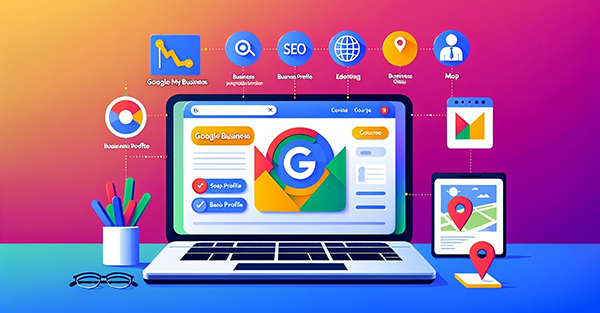
Your Google Business Profile can help you appear in AI Search results. The key is to be thorough. Specifying your service listings can signal how your practice offers certain solutions that can help patients with their eye-related concerns. Being accurate with categories can likewise help in establishing your expertise.
There are also opportunities when you include condition-specific Q&As because you help guide potential patients. Photos can also help by making it easier for people to find your clinic and giving them an idea of what to expect when they enter your premises. Not only that, but your Google Business Profile also supports your broader eye care marketing services.
A static profile often gets skipped by AI citations because it doesn’t provide the dynamic, specific answers AI models look for when answering a person’s question.
2. Write Content That Answers the Questions Patients Actually Ask
Patients aren’t familiar with medical terms or jargon and often ask symptom-based questions when curious about eye doctors. Creating pages that directly answer questions about LASIK, cataracts, glaucoma, and dry eye signals that you’re a practice that can help them.
Being generous in sharing eye care knowledge can lead the right people to your practice. When preparing Q&A sections, it’s important to keep them simple because people might not understand them if you use too many medical terms.
3. Add Schema Markup So AI Tools Can Read Your Site
Schema markup is a system of digital labels added to your website’s code. It translates your regular text into a universal language that search engines and AI models can understand. Instead of forcing an AI to guess what your page is about, schema explicitly tells the AI exactly what data points are on the page, who wrote the content, and what services you provide.
Physician schema acts as a digital medical license and business card for medical practices. It tells AI models that you’re a verified, legitimate healthcare provider. AI models use this specific label to cross-reference your data with trusted medical databases, which heavily boosts your site’s authority and credibility.
AI models also look for MedicalWebPage schema, which flags the page as medical content rather than a general blog or product page. This tells AI models the content carries higher stakes and deserves closer scrutiny for accuracy.
FAQ schema is a label for a list of questions and direct answers. It pairs the exact question a patient might ask with the answer your page provides. It lets AI quickly pull clear answers to show users in search results.
4. Show Your Credentials Where AI Search Can Find Them
Another helpful way to be included in AI results is to showcase your credentials as medical experts. Including your clinician authorship, board certification mentions, and bios in every article signals that you’re a legitimate healthcare provider. These details shouldn’t be buried in a footer.
AI engines classify health content as strictly YMYL (Your Money or Your Life). Because inaccurate medical information can cause real harm, AI models apply their highest standards of verification to these topics. AI models scrutinize not just what you write on your website, but who wrote it.
5. Get Your Practice Cited by ChatGPT and Other AI Tools
AI models don’t search or display information like traditional search engines. They synthesize information to answer a user’s prompt directly. Working with an AI search optimizer to build content specifically for AI retrieval systems can get your practice cited as a source in these AI responses.
AI models prioritize speed and accuracy when providing information, so answering a question directly in the first sentence helps. Likewise, AI relies heavily on structural markers to parse long articles. If your content is a wall of text, the AI’s retrieval system will skip it.
While you want to establish your medical authority, your text should be written plainly so more people can understand it. AI models are optimized to explain complex topics to everyday users. The focus is on information density, skipping conversational filler and marketing copy.

6. Use Patient Reviews to Build Trust Signals for AI Search
It’s not enough to simply have reviews and 5-star ratings. AI systems and Google Business Profile also factor review content into local ranking signals, weighing how recent and specific those reviews are — a five-star review from years ago carries less weight than a detailed one from last month. Encouraging patients to leave detailed reviews highlighting your services and expertise helps get your practice included in AI results — a habit that separates the ophthalmology practices AI tools cite from the ones they skip. The key to reputation management for eye doctors is to involve your team in the process so they can proactively encourage detailed reviews.

7. Track How Often AI Search Mentions Your Practice
While traditional SEO tracks how your website ranks in search results, AI search tracking is completely different, as it focuses on brand mentions, sentiment, and footnote citations. Combining specific manual prompts with emerging analytics tools helps you see where your practice stands.
You can use SEO tracking tools that include an AI Overview feature to see your practice’s ‘Share of Voice’ in AI-generated answers. ChatGPT uses a mix of its internal weights, Bing search retrieval, and direct media partnerships to source medical answers. You can conduct regular “Prompt Audits” directly inside ChatGPT using specific evaluation queries. Likewise, you can test Gemini with localized intent prompts to see how it synthesizes your local clinical reputation.
Why Your Eye Clinic Is Not Appearing in Google AI Search
There are many possible reasons why your practice doesn’t show up when people are searching for eye experts online. It may be because of thin content, no named author, an outdated Google Business Profile, missing schema, and generic stock content copied across every eye care site.
Forgetting to streamline your content, request specific reviews, and optimize your Google Business Profile may be affecting how AI engines perceive your practice. Calibrating your methods to be more AI-search-friendly may help you yield better results.
What It Takes to Own AI Search as an Ophthalmology Practice in 2026
Ranking in AI search doesn’t mean abandoning SEO best practices. AEO is essentially SEO plus a few new signals (schema, authorship, AI-ready content structure). If you want your ophthalmology practice to adapt to today’s digital landscape, contact our team at 888.792.8384 or schedule a free exploratory meeting through our website.

FAQs
What is AI search optimization for ophthalmologists?
AI search optimization means structuring your practice’s website, content, and Google Business Profile so tools like ChatGPT, Google AI Overviews, and Perplexity can find, understand, and cite your practice when a patient asks a question about eye care. It builds on standard SEO but adds signals AI models weigh heavily, such as schema markup, named clinician authorship, and direct answer content.
How is ranking in AI search different from ranking in Google search?
A Google search ranking is a position in a list of ten links. An AI search result is a single generated answer that pulls from a small set of sources it trusts enough to cite. Most AI Overview citations come from pages that already rank in the top 10 organically, so strong SEO is still the foundation. AI search adds extra weight to clear structure, plain language, and visible medical credentials.
Can optometrists show up in ChatGPT and AI search results too?
Yes. Optometrists face the same shift as ophthalmologists, since patients often search for eye care without distinguishing between the two specialties. The same steps apply: a complete Google Business Profile, condition-specific content, schema markup, and named provider credentials.
How long does it take an ophthalmology practice to show up in AI search results?
Most practices that systematically apply these steps start seeing AI search citations within three to six months, faster in markets where local competitors have not optimized for AI search yet.
Does a Google Business Profile affect AI search rankings?
Yes, significantly. A complete profile with accurate service categories, condition-specific Q&A, and recent reviews mentioning specific treatments is one of the strongest signals for local AI search visibility, since both Google AI Overviews and AI assistants pull heavily from Business Profile data for local medical queries.