Veterinary Website Optimization for AI Search: How to Get Your Clinic Found in LLMs

Your veterinary website is live, your services are listed, and your clinic has spent years building its reputation. But when a pet owner asks ChatGPT which vet handles dog emergencies, or queries Google AI Overviews for cat vaccine schedules, AI tools surface another clinic. Not yours.
The problem is not your content volume. AI search tools like Google AI Overviews, ChatGPT, and Perplexity evaluate veterinary websites on completely different signals than traditional search engines do. Veterinary practices built their online presence to rank in blue links, and AI requires something else entirely.
That gap is what this guide addresses. Veterinary website optimization for AI search calls for a specific, deliberate approach, and the clinics that adapt first will pull ahead in AI-driven pet owner search.
How AI Search Has Changed the Way Pet Owners Find Vet Clinics
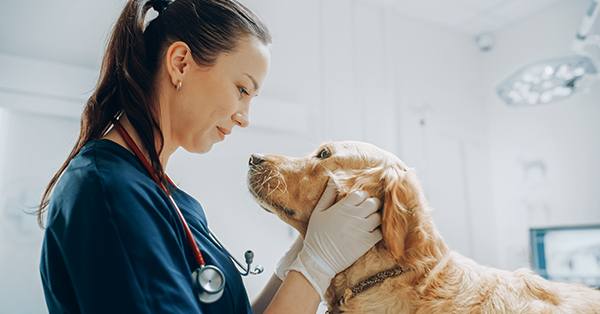
A pet owner’s dog eats chocolate. Rather than opening Google and scrolling through blue links, they type the question directly into ChatGPT or ask Google’s AI Overviews for an immediate answer. That shift in search behavior is now the norm, and it has direct consequences for every veterinary clinic’s visibility.
AI search tools generate direct answers at the top of results pages, pulling from websites they assess as structured and authoritative. Pet owners accept those answers without scrolling further. The clinic that earns an AI citation gets the inquiry before any competitor appears on the screen.
Two tracks govern veterinary search today. AI Overviews and tools like Perplexity field informational queries about pet health, symptoms, and care. Local searches like “emergency vet near me” still run through the traditional local pack, and both tracks require deliberate optimization.
AI discovery already reshapes how pet owners find veterinary care, and the trend is accelerating across every local service category. Practices that optimize for AI search now build an advantage that compounds over time. Understanding what AI engines actually look for is the first step toward getting your clinic in front of them.
Why Most Veterinary Websites Are Invisible to AI Overviews
What does an AI engine look for when it decides which clinic to cite? Most veterinary websites fail on five consistent signals, and each gap tells AI tools to look elsewhere.
- Generic service descriptions top the list. AI engines favor pages that answer specific questions pet owners ask, not pages that list procedures without context.
- Missing structured data compounds the problem. Without schema markup, AI cannot reliably classify a clinic’s services, hours, or location.
- Weak E-E-A-T signals create a third barrier. Veterinary content falls under Google’s YMYL category, and AI tools scrutinize author credentials and trust signals more heavily here than in almost any other industry. Anonymous team pages with no listed qualifications actively hurt credibility.
- The next issue is thin content history. A clinic with one outdated blog post signals nothing to AI about topical authority.
- Finally, Google removed AI Overviews from local provider queries entirely, which means clinics that chase AI visibility on location-based pages optimize the wrong content. The real AI opportunity sits in educational and informational pages, and fixing each gap starts with understanding what AI engines actually trust.
6 Ways to Get Your Veterinary Website Optimized for AI Search

1. Build E-E-A-T Signals
Google classifies veterinary content as YMYL, which means AI tools hold it to a higher standard of expertise, experience, authoritativeness, and trustworthiness. Every page on a veterinary website carries that scrutiny, and the signals need to be visible.
Author attribution is the starting point. Every blog post and educational article should list a credentialed veterinarian by name, including their degree, years in practice, and any specializations. AI models check for this, and anonymous content earns no authority credit.
Team pages need the same treatment. List qualifications, AVMA memberships, and link to verifying bodies where possible. Consistent name, address, and phone number across the website, Google Business Profile, and directory listings reinforce the trust signals AI checks across platforms. Recent client reviews on Google add real-world validation that compounds those signals over time.
2. Implement Schema Markup
Think of schema markup as the translation layer between what your website says and what AI actually reads. Without it, AI engines interpret your content from context alone, and they frequently misclassify or overlook veterinary websites entirely.
Schema markup is JSON-LD code embedded in a website’s backend that tells AI search engines precisely what your business is, what services you offer, and what questions your content answers. Google’s structured data guidelines confirm that proper markup increases eligibility for enhanced search features and helps AI systems categorize content with confidence.
Three schema types matter most for veterinary websites. Local Business schema using the Veterinary Care type covers your clinic name, address, hours, and service area. The FAQ Page schema marks up questions and answers on service pages, which AI engines pull from directly. Medical Web Page schema signals that your educational content carries professional authority.
3. Optimize Your Google Business Profile for Local AI Visibility
The clearest path to local AI visibility does not start inside your website code. It starts with your Google Business Profile. When pet owners search for a vet nearby, AI tools pull directly from GBP data to determine which clinics surface first.
Start with the fundamentals. Select “Veterinarian” as your primary category and add every relevant subcategory. Write descriptions for each service rather than listing procedure names alone. Seed the Q&A section with common questions answered directly, because AI reads that content when generating local summaries.
Review velocity matters as much as review volume. Respond to every review, because active responses signal a trustworthy practice to AI systems. Adding photos of your clinic, team, and patient care consistently contributes to the local trust scores AI uses in visibility decisions.
4. Create Authoritative Content That AI Engines Actually Cite

Picture what a pet owner types into ChatGPT: “Is it safe to give my cat ibuprofen?” If your website poses that exact question as a heading and answers it immediately, AI tools have what they need to cite your clinic. If your page says “We offer feline care services,” AI tools move on.
Structure every service page to answer what the service is, who it suits, and what the visit involves. Include a FAQ block on each page using the FAQ Page schema, because AI engines scan those structured question-and-answer formats when building AI-generated summaries.
Blog content builds topical authority over time, which is good for both AI search as well as for traditional SEO. A cluster of posts on a single subject, such as senior cat care, with each post linked to the others, signals that your practice covers the topic in depth. A single outdated post signals nothing.
5. Build Service Pages For Local Intent (Not Generic Copy)
A service page that reads the same as every other veterinary website gives AI search tools no reason to prefer your clinic. Local intent content changes that. Specificity signals to AI engines that your practice serves a real community, and AI rewards that signal consistently.
Mention your city, neighborhoods, and service area naturally throughout each page. A page about dog dental cleanings should reference the pet owners your clinic actually serves, not a generic national audience. AI tools that handle location-aware queries favor practices whose content reflects genuine local relevance.
Address what your local clients actually ask. If your area sees high tick exposure from nearby trails, or your community includes many apartment-dwelling cat owners, those details belong on your service pages. Generic copy serves no community, and specific content earns local trust from both pet owners and the AI tools that guide them.
6. Use Question-Style Headings And Answer Immediately
AI engines search for content that delivers a direct answer to a specific question. A heading like “What vaccines does my puppy need?” followed by a one-sentence answer in the first line gives AI a clean, extractable unit of information to cite. AI-generated answers consistently pull from this format.
This structure aligns with Answer Engine Optimization principles and supports broader digital marketing campaigns for veterinarians. AI tools favor content that mirrors how pet owners phrase real questions, in full conversational sentences rather than abbreviated keyword strings. Framing headings as actual client questions increases the probability that your answer appears in AI-generated summaries.
Apply this across service pages, blog posts, and FAQ sections. Each question heading should deliver its answer in the first sentence, with supporting detail in the lines that follow. Short paragraphs, plain language, and direct answers give AI the atomic units of information it actively looks for.
Where Vet Clinics Should Start with AI Search Optimization

Start with your Google Business Profile. It requires no development work and delivers the fastest impact on local AI visibility. From there, add schema markup to your homepage and top service pages, then rewrite your content with question-style headings, FAQ blocks, and local intent throughout.
AI search optimization is not a one-time project. Practices that maintain fresh content, respond to reviews consistently, and keep their GBP current hold their AI visibility longer than those that optimize once and stop. The clinics already doing this are pulling ahead.
iMatrix builds veterinary websites with AI search optimization built into the foundation. If your current site lacks the structured data, content architecture, and local signals AI engines require, our team can help you close those gaps. Get special pricing on a veterinary website built for AI search, or call 888.792.8384 to get started.
FAQs
Why is my vet clinic not showing up in Google AI Overviews?
Two factors explain most cases. Google removed AI Overviews from local provider queries in 2025, so location-based pages like “veterinarian in [city]” will not appear in AI Overviews by design. For informational veterinary content where AI Overviews do activate, your site likely lacks structured data, question-style content, or E-E-A-T signals that AI engines require before citing a source.
What is the difference between SEO, GEO, and AEO for a vet practice?
SEO gets your clinic into traditional Google search results and the local map pack. GEO (Generative Engine Optimization) gets your educational content cited in AI-generated summaries on Google, Perplexity, and Bing Copilot. AEO (Answer Engine Optimization) gets your content selected as the direct answer in voice search and AI chat tools. All three serve different stages of how pet owners find and choose a clinic.
Does schema markup actually help veterinary clinics appear in AI answers?
Yes, and the impact is measurable. Schema markup tells AI engines exactly what your business is, what services you offer, and what questions your content answers. Without the FAQ Page schema and Local Business schema, AI must guess your content’s context from text alone and frequently misclassifies or skips unstructured pages entirely.
How long does it take for AI search optimization to show results?
Google Business Profile updates and schema markup changes can influence AI visibility within a few weeks, as Google recrawls frequently updated pages. Content rewrites and topical authority building typically take three to six months to produce consistent AI citation rates. The timeline mirrors traditional SEO, but the signals that drive movement differ significantly.
Should vet clinics prioritize local SEO or AI search optimization?
Local SEO delivers the highest volume of immediate, appointment-ready traffic and should come first. Google Business Profile optimization, local pack visibility, and review velocity all drive pet owners who are ready to book. Layer in AI search optimization as your content library grows, because the two tracks reinforce each other over time.