
Lead Generation for Chiropractors: A Practical Guide to Attract and Convert More Patients
Every chiropractic practice depends on a steady stream of new patients, and that stream starts with lead generation. For chiropractors, this means turning curious visitors and referrals into prospective patients who eventually book an appointment and receive chiropractic care. Without a system in place, a clinic relies on chance rather than consistent growth.
The way patients choose a healthcare provider has changed, and most now search online long before they pick up the phone. Local SEO, PPC, content marketing, and referral programs each help a clinic generate leads and create genuine interest in its services. This article walks through practical chiropractic marketing strategies that chiropractors can use to build a reliable lead generation system, one that turns casual interest into booked appointments and steady patient leads.

What Counts as a Lead in a Chiropractic Practice?
A lead is a person who shows interest in a product or service but has not yet made a purchase. In a healthcare setting, this definition shifts slightly since trust and timing carry more weight than in typical retail transactions.
Chiropractic leads describe someone who has expressed interest in receiving care from a chiropractor, whether by filling out a contact form, calling the office, or engaging with content on social media. This person recognizes a need, such as back pain or mobility issues, but has not yet committed to treatment.
The gap between interest and a booked appointment is where many practices lose potential patients. Someone might research chiropractors for weeks, compare reviews, and read blog posts, yet never schedule a visit without the right nudge, a follow-up call, an email, or a compelling offer. Closing this gap is often the real challenge in chiropractic lead generation.
11 Ways to Generate Leads for Your Chiropractic Practice
1. Build a Strong Online Presence With Your Website
A chiropractic website works best when every page points toward a single decision. Clear calls to action, such as a button to schedule an appointment, remove guesswork for visitors ready to book. Short lead capture forms help too, since asking for just a name and phone number produces far more completions than a long questionnaire.

Live chat or a chatbot answers questions about insurance, hours, or treatment the moment someone lands on the page. Page speed and mobile-friendly design carry just as much weight, since most people searching for local care do so from a phone and won’t wait for a slow site to load.
Landing pages built around a specific offer, such as a free consultation or a new patient special, convert better than a generic homepage. Together, these elements turn a website into an active part of the lead generation system rather than a digital brochure.
2. Strengthen Local SEO So Nearby Patients Can Find You

A complete Google Business Profile forms the foundation of local SEO for any chiropractic practice, since it determines whether the clinic shows up when someone nearby searches for care. Accurate hours, a working phone number, correct categories, and updated photos all affect how well the profile performs in local search results.
Location-based keywords help too, since phrases that pair a service with a city or neighborhood connect prospective patients to the nearest practice rather than one across town. Reviews carry similar weight, and a clinic that collects new reviews regularly and responds to them shows both search engines and readers that patient feedback matters.
NAP consistency– the same name, address, and phone number listed identically across every directory- ties these efforts together. A single mismatched detail can quietly push a practice out of the local results patients rely on.
3. Use Content Marketing to Build Interest and Generate Leads

Content marketing works best when it answers questions patients are already typing into search engines. Posts about common conditions, what a first visit involves, or how insurance coverage works draw in prospective patients still deciding whether chiropractic care fits their needs.
Target keywords give this content direction, since aligning blog topics with terms people actually search keeps a practice visible in relevant results. A post built around a specific keyword, such as a type of pain or a treatment method, reaches readers right when they’re looking for an answer.
Patient testimonials and case studies add a different kind of proof by showing real outcomes rather than general claims. When a reader sees someone with a similar condition improve under a chiropractor’s care, that story often does more to create leads than a page of statistics.
4. Create Video Content That Explains Chiropractic Care

Video content reaches people who would rather watch than read, and for chiropractic care, seeing a treatment explained often eases hesitation that text alone cannot. Short explainer videos covering common questions, such as what an adjustment feels like, give prospective patients a clearer picture of what to expect.
Clinic tours add another dimension by showing the space, the equipment, and the people who provide care, which removes uncertainty for someone who has never visited a chiropractor. Video testimonials carry similar weight, letting real patients describe their experience in their own words rather than through a written quote.
YouTube remains the strongest home for longer explainer content, since search and video overlap there in a way few platforms match. Shorter clips from the same footage work well on social media, introducing the practice to new audiences and driving traffic back to the website.
5. Offer Gated Content to Capture Contact Information

A gated resource, such as a short guide, checklist, or ebook, gives a visitor a reason to share contact details before they’re ready to book. Topics like recovering from a specific injury, preparing for a first visit, or managing pain between appointments tend to perform well, since they solve a real problem without requiring a phone call.
This kind of lead magnet works because it asks for something small, typically just a name and email, in exchange for something useful. A visitor who downloads a guide has already shown more intent than someone who simply scrolled past a blog post, which makes that contact worth pursuing.
Once the exchange happens, nurturing can begin. A short email sequence with related tips, answers to common questions, and an eventual invitation to schedule a visit turns a downloaded resource into a booked appointment over time, rather than letting that early interest fade.
6. Run Paid Ads to Reach People Actively Searching for a Chiropractor
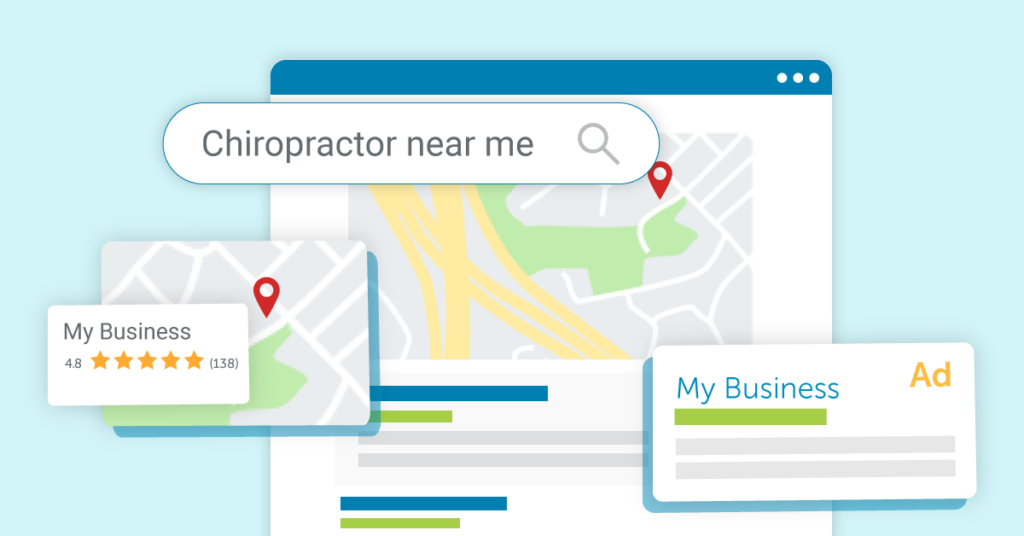
Paid ads reach a different segment of the audience than SEO does, and well-targeted chiropractor ads place a practice in front of someone the moment they search. Google Ads works well for high-intent keywords, phrases like same day chiropractor or back pain relief near me, where the searcher has decided to seek care and just needs to choose a provider.
Local map ads extend that reach by placing a clinic near the top of map results, where someone compares distance, hours, and reviews before calling. This matters, since most people choosing between nearby options rarely scroll past the first few results.
Facebook and Instagram ads serve a different purpose, reaching people who aren’t actively searching but might respond to a well-timed offer or a reminder that the practice exists. Together with search-based PPC, they round out a strategy covering both immediate demand and interest that builds over time.
7. Grow Your Social Media Presence

A social media presence built around education tends to outperform one built around promotion. Short posts explaining what chiropractic care treats, correcting common misconceptions, or walking through a simple stretch give followers a reason to keep watching a page that isn’t constantly asking for a sale.
Engagement matters just as much as posting frequency, since a practice that responds to comments and shows up in conversations builds familiarity long before someone becomes a patient. This back and forth also signals to the platform’s algorithm that the content is worth showing to more people.
Targeted local ads extend that organic reach to nearby people who haven’t found the page yet, filtering by zip code, age, or interests so the budget reaches likely prospective patients. Paired with consistent posting, this combination keeps the practice visible to the same community it serves.
8. Nurture New Leads With Email and Fast Follow-Up
Response speed often determines whether a lead becomes a patient or moves on to the next practice in their search results. A delayed reply, even by a few hours, can lose that person to a competitor who answered first.
Automated email sequences close that gap by sending an immediate confirmation the moment someone submits a form, followed by a short series of messages that build on their interest. This keeps the practice present in a lead’s inbox without requiring staff to track every new contact by hand.
Segmenting leads by interest or condition makes that follow-up more relevant, since someone researching back pain needs different information than someone asking about pediatric care. A tailored message feels personal rather than generic, moving a lead toward a booked appointment faster than a one-size-fits-all approach.
9. Partner With Other Healthcare Providers for Referrals

A referral relationship works best when it flows in both directions rather than one practice constantly sending patients without receiving any in return. Physical therapists, primary care doctors, and local gyms regularly meet people dealing with pain or mobility issues, making them natural partners for reaching patients search alone won’t find.
Structuring this kind of partnership starts with a conversation about what each side needs, followed by something concrete, such as referral cards, a shared online form, or an agreement to mention each other during visits. A gym might promote a chiropractor to members recovering from an injury, while the practice recommends that gym once treatment ends.
Tracking referrals matters just as much as building them, since a source code on intake forms or a simple spreadsheet noting who sent whom reveals which partnerships produce new patients. This tracking shows which relationships deserve more attention.
10. Host Workshops and Local Events
A free workshop or community talk puts a chiropractor in front of people who might never search online for care but would happily attend a session on posture or back pain prevention. These events position the practice as a resource first, which builds more genuine interest than an advertisement ever could.
Local venues such as libraries, community centers, or senior centers offer natural settings for this kind of talk, while a webinar extends that same reach to people who prefer to attend from home. Either format works well, since the goal is to give people a reason to interact with the practice outside a clinical setting.
Following up turns attendance into more than a pleasant hour. Collecting names and emails at check-in, then sending a short note with a related resource or an invitation to schedule a consultation, keeps the conversation going while the topic stays fresh.
11. Track Your Results and Adjust Your Marketing Strategies

Conversion rate and cost per lead tell a practice whether marketing dollars are turning into booked appointments, rather than website visits or unanswered phone calls. A campaign with plenty of clicks but few conversions often signals a mismatch in the offer, the landing page, or the audience.
Measuring results by channel matters as much as tracking overall numbers, since Google Ads, local SEO, referrals, and social media each attract prospective patients at a different cost. A practice that only looks at total leads misses which channel is worth the budget and which one quietly drains it.
Reviewing this data on a regular schedule, monthly at minimum and weekly during an active campaign, keeps a practice from riding out a bad month too long. Small adjustments, such as shifting spend toward a channel that’s converting well, produce better growth than waiting for a quarterly report to reveal the same problem.
Turning Chiropractic Lead Into a Steady Stream of Patients
Lead generation for chiropractors rarely comes down to one tactic working alone. A strong website, active local SEO, consistent content, and a few well-chosen partnerships all work together to turn curious visitors into booked appointments, while tracking results keeps that system improving over time.
If your practice is ready to build a marketing strategy that brings in patient leads consistently, iMatrix works with chiropractors every day to put these pieces in place. Reach out to us at 800.792.8384 or click here to talk through what your practice needs right now.
FAQs
What is lead generation for chiropractors?
Lead generation for chiropractors is the process of attracting people interested in chiropractic care and collecting their contact details so you can follow up and turn them into patients.
How much should a chiropractor spend on marketing?
Most small practices spend seven to eight percent of revenue on marketing. Busier markets may need ten percent or more to stay competitive and keep new patients coming in.
How long does it take to see results from lead generation?
Paid ads can bring in leads within days. SEO and content marketing usually take three to six months to build steady, ongoing patient interest.
What is the difference between a lead and a patient?
A lead has shown interest in chiropractic care but hasn’t booked yet. A patient has scheduled and attended an appointment at your practice.
What is the fastest way to generate leads for a chiropractic practice?
Paid search and local map ads work fastest since they target people already searching for a chiropractor near them and ready to book.