
AEO for Chiropractors: How to Show Up in AI Search Results
Let’s say a patient is asking ChatGPT or Google’s AI Overview for a chiropractor nearby. Most practices don’t appear in the results because their website wasn’t built to be quoted. AEO for chiropractors means restructuring your site, reviews, and listings so AI tools can confidently name your practice.
TL;DR: AEO or Answer Engine Optimization means structuring your site, reviews, and listings so AI tools can name your practice with confidence. Three things move the needle fastest: clear answers on service pages, complete and consistent business listings, and reviews with real detail.

What Is AEO for Chiropractors
Answer Engine Optimization (AEO) for chiropractors refers to the practice of updating your online information so AI tools and voice assistants name your clinic directly as one of the top answers. Instead of showing a long list of blue links on a search page, AEO helps your business win the direct spoken or typed recommendation.
Patients nowadays ask conversational questions detailing their symptoms when turning to AI for answers. If your content isn’t optimized for AEO, patients get their answers without ever seeing your clinic’s name or website.
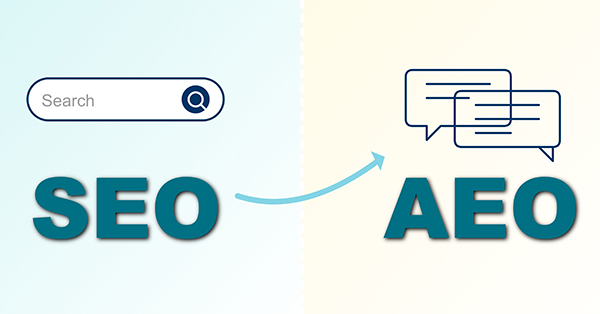
How Answer Engine Optimization (AEO) Is Different From SEO
Traditional SEO services focus on ranking web pages in a list of results to drive website links. Meanwhile, AEO optimizes content so AI tools, voice assistants, and featured snippets may extract and state clean, direct answers. While traditional SEO is designed to help humans browse a list of web pages, AEO ensures your brand’s data is digestible for machines and AI models. AEO builds brand citations in a zero-click world, whereas SEO builds traditional website traffic. Ranking well on search results doesn’t guarantee an AI citation, so AEO drives different results.
SEO focuses on link building while AEO values entity recognition. SEO utilizes keywords to rank higher on search results, while AEO uses schema, which acts as a mandatory machine-readability filter. Whereas search engines index and rank complete pages based on topic layout, AI strictly looks for extractable text. AEO is not an alternative to SEO, but rather its natural evolution. If your practice hasn’t nailed down the fundamentals yet, our guide on seo for chiropractors covers the groundwork AEO builds on.
How AEO Overlaps With GEO
While different, AEO and Generative Engine Optimization (GEO) overlap heavily on technical foundations, relying on authoritative content, structured data, and entity clarity. AEO targets direct, extractable extractions for search engine features like snippets and AI overviews. GEO focuses on brand synthesis and citations across standalone LLMs, such as ChatGPT or Claude. They both optimize content for machine consumption instead of human browsing. They have the same underlying content principles but on different platforms.
Why Patients Are Asking AI Instead of Googling
Patients nowadays type specific, conversational questions, such as “can a chiropractor help with a pinched nerve,” straight into AI, skipping traditional search engines. They’re looking for one immediate, straightforward answer instead of ten conflicting blue links to compare.
When you use search engines, you get a myriad of results, including ads, SEO blog posts, and forum threads. There might be contradictory claims in every link you open. When using AI, you get clear direction condensed into a single, plain paragraph.
What a Typical AI Search Looks Like for a Chiropractor
Patients usually search using phrases they can relate to, such as their location or the pain issue they want to address. A patient dealing with nerve pain might ask, “can a chiropractor help with a pinched nerve,” while someone comparing local options might ask, “best chiropractor for sciatica near me.” Both queries name a condition and an intent, which gives AI tools something concrete to match against your service pages.
Patients don’t understand complicated medical jargon, so keeping it simple and relatable would benefit your practice if your intention is to be more visible online. More and more people are turning to AI search for their concerns, and your business may be missing out if you don’t optimize your digital presence for AI tools.

How AI Tools Decide Which Practice to Name
AI tools don’t just guess results. They pull information from signals it can verify. AI tools determine which practices to name in results or answers by processing the inquirer’s location data and analyzing vast databases of local business information. It matches your specific request against a set of ranked criteria to find the most relevant, reliable options.
AI tools have a geographic proximity filter to lead inquirers to practices that are accessible to them and semantic keyword matching, scanning business descriptions, service menus, and websites to find clinics that explicitly list treatments for your exact condition. Reputation and review sentiment are also analyzed, evaluating average star ratings across local platforms to ensure quality control.
The Signals AI Checks Before Naming a Practice
AI tools check for accurate business information. AI tools rely on flawless Name, Address, Phone (NAP) data to confidently verify your physical location before displaying it to nearby users. AI doesn’t just count star ratings. It uses natural language processing (NLP) to read review text and match patient success stories to user platforms. AI crawlers also read the backend code of your website to understand your medical specialties, practitioner credentials, and service areas.
When AI finds conflicting information about your practice across various directories on the internet, it loses confidence in your business identity and drops your ranking. AI tools analyze these things before determining if your practice is legitimate enough to appear in the answers they provide to users.

Why Keyword Stuffing Doesn’t Work Here
Keyword stuffing, or the practice of loading a web page with an excessive or unnatural number of target keywords in an attempt to manipulate search engine rankings, doesn’t help in AEO for various reasons. AI systems prioritize usefulness and contextual relevance over simple keyword frequency. This is an old SEO trick to show up on search engines. Today’s AI systems read text like a human being, summarizing your practice based on actual capability.
Semantic AI focuses on entities rather than words. AI evaluates your site based on entities and concepts, ignoring how many times you repeat the phrase. Conversational review verification is also involved when AI evaluates results. Machine learning tends to penalize poor user experience, so that’s also something to consider.
Where Your Practice Can Actually Get Cited
There are various AI platforms people tend to frequent nowadays when asking questions. It would be practical for your business to target being included in several platforms because it would increase your chances of reaching a wider audience.
Google AI Overviews
Formerly known as SGE, this platform pulls information directly from highly authoritative, contextually rich web nodes to answer complex medical and local questions. AI crawls your site’s backend JSON-LD schema to verify your clinical credentials, practitioners, and exact location data. Google AI Overviews also favor deep-link URLs dedicated solely to a single condition over generic homepages.
ChatGPT, Perplexity, and Gemini Answers
Large Language Model (LLM) search engines don’t simply index keywords. They synthesize data across multi-platform networks to recommend trusted businesses. They use primary digital map directories, being fed data directly from platforms like Google Maps and Apple Maps. There’s also an aggregated review sentiment matrix involved, with natural language summaries extracted from patient reviews on trusted platforms, such as Yelp and Healthgrades. They also refer to independent local media mentions and Reddit and Forum Threads for information.

Featured Snippets and People Also Ask
These traditional search features capture high-intent users by displaying direct, bite-sized answers to specific user questions at the top of the search page. Having bullet-point treatment protocols, comparison matrix tables, definition matrix blocks, and H2 and H3 heading hierarchies may help your practice be included in results.
Voice Search Through Siri and Alexa
Voice search relies heavily on localized, immediate, and highly conversational data points because users speak directly to devices differently than they type. Siri relies completely on this directory to pull names, phone numbers, and physical navigation routes for iPhone users. Alexa refers to the Bing search index to fetch business hours, locations, and user ratings for smart home devices. Having natural conversational FAQs and being particular with local boundaries may help.
7 Tips to Show Up in AI Search Results
While some things are out of your control, there are ways to help your practice appear in AI search results. You may position your chiropractic clinic in a highly authoritative manner with the right strategy.
Fix Your Service Pages First
When a person searches chiropractic care-related questions on AI platforms, they usually have a specific pain-related concern they would like to be addressed.
Write Headers That Match Real Patient Questions
Patients don’t type medical jargon they’re not familiar with. They type exactly how they feel and ask conversational AI engines can easily match. Using practical headings such as “What Causes Lower Back Pain?” instead of clinical phrasing may help your practice signal that it’s an entity that may help people with specific issues they have.
Answer the Question in the First Two Sentences
AI search engines use automated snippets to pull fast answers. Being direct to the point may help your practice in AI answers. It would be ideal to have direct answers up top with supporting details below them. The first two sentences should summarize what a potential client would need to know. Likewise, the direct answers ought to be plain language, something easy to understand.
Add Real Depth, Not Filler
True clinical depth is what keeps AI engines citing your site as an authoritative source over competitors who rely on thin, repetitive copy. Mapping complete pathways from the initial digital spinal scan to the final manual adjustments may help patients understand the process.
Turn Your Patient Condition Pages Into Answer Assets
Converting your existing pages to data that may lead to something trusted provider AI systems recommend may help when it comes to AEO.
Pick the Conditions Patients Actually Search
Building highly cited answer assets requires you to choose the foundational, high-volume conditions that people search organically every day. These include high-volume conditions such as lower back pain, sciatica, neck pain, headaches, and sports injuries, each with its own dedicated page. Using layman’s terms instead of clinical equivalents may get your practice cited in direct answers.
Build Each Page Around One Core Question
An AI engine will bypass a long, rambling page that tries to cover everything in favor of a hyper-focused URL that provides one definitive answer. Dedicating an entire page to answering a single question, like “how long does it take for sciatica to heal?” instead of burying it in FAQs may help. You may also keep the semantics clean by having dedicated pages to certain concerns instead of grouping all issues you address.
Add FAQ Sections to Your Highest Value Pages
Your Frequently Asked Questions (FAQs) may help with chiropractors’ AEO if you utilize them strategically.

Which Pages Need FAQs Most
Prioritize adding FAQ sections to your highest-converting, high-intent digital assets rather than hiding them on a generic, standalone page. The service pages and top condition pages are best prioritized because these are the ones most relevant to common patient queries. Target your core service offerings first, such as chiropractic adjustments, spinal decompression, or physical therapy pages.
What a Strong FAQ Answer Looks Like
An AI-optimized FAQ answer cuts out all fluff and medical hedging, providing a direct response that mirrors the exact phrasing a patient uses in real life. Using conversational, first-person headings instead of clinical text may help AEO tools recognize your FAQs. Avoiding vague, protective industry fillers right at the start of your answer may be helpful as well. When applicable, leading with a direct ‘yes’ or ‘no’ before providing any secondary contextual details would be practical. Condensing answers to a maximum of 60 words would also help.
Get Your Google Business Profile AI Ready
Modifying your Google Business Profile to become AI-ready is completely free and is something your practice may work on without much effort.
Keep Every Field Accurate and Current
AI search engines will drop your visibility instantly if they detect conflicting information between your Google Business Profile (GBP) and your website. You can audit your physical address, meaning matching your address character-for-character with your official lease and website footer. The hours, services, address, and phone number should be updated and consistent throughout all platforms.
Use Categories and Services to Spell Out What You Treat
Vague profiles force AI to guess your specialties, while a fully detailed services list tells the engine exactly when to recommend your practice. Being very specific regarding what your practice has to offer may help lead the right people to your clinic.
Make Your Reviews Service Specific
Being proactive in getting reviews may help your practice when it comes to AEO. Guiding patients to the right platforms and offering suggestions may also benefit you.
Why Detailed Reviews Beat Star Ratings Alone
While a 5-star rating says that a patient likes you, a detailed review gives the engine the exact semantic proof it needs to cite your clinic for particular search queries. A review that mentions “sciatica” or “prenatal chiropractic” gives AI something specific to cite. When a user searches for “best prenatal chiropractor,” Google AI Overviews pulls text snippets from your reviews to justify ranking you first.
How to Ask Patients for Reviews That Actually Help
Your front desk staff may help your practice get the reviews you need to boost your chances of being included in AI answers. Instead of asking them to recommend clients leave a ‘good review,’ it would be more helpful to use guided prompts that encourage patients to tell a specific story that would put your practice in a good professional light.
You may opt for a symptom-focused prompt, highlighting what a patient felt before entering your clinic. You may also go for a more treatment-specific script, expounding on the effectiveness of the treatment they underwent at your practice. You may also double down on your specialization. If your practice focuses on prenatal care, you may ask satisfied patients to focus on that in their review. Asking for reviews doesn’t have to stop once a patient leaves your clinic. You may send them a follow-up text message or email, and guide them to platforms where they may leave a review.

Keep Your Listings Consistent Across the Web
Consistency is key to maximizing AEO tools for chiropractors. All your hard work might be overlooked if you don’t ensure the information you share about your practice adds up.
Match Your Name, Address, and Phone Number Everywhere
You’re likely aware of which platforms your practice is listed in, including directories, social media profiles, and your website. All the information listed should align for AEO to recognize your clinic as a legitimate business. There may be instances wherein your business shows up in directories even if you didn’t sign up for them. It would be prudent to ensure that all data in the listing is accurate and updated.
Check Whether Your Practice Is Already Getting Cited
Checking AI tools for the answers that you want to be included would help in your journey of being included in AI answers.
Ask the AI Tools Directly
Type the questions a typical patient would ask into various popular AI platforms, such as Google AI, Perplexity, ChatGPT, and Claude. You may see who comes out when you ask the right questions.
What to Do If You’re Not in the Answer
If you don’t make the active effort for AEO (answer engine optimization), it’s likely that your practice isn’t included in AI answers. If you want to be featured as a trusted healthcare practice, you may apply the previously mentioned strategies. In time, you would position your practice as an entity people can rely on for pain relief and wellness.
Where to Start If You Want AI to Recommend Your Practice
AEO is not just one setting to switch on. It is a sum of a clear website, complete listings, and real reviews. Every citation that a competitor earns is ultimately a patient who never saw your name in AI answers. Your practice can increase online visibility with the right strategy. iMatrix’s AI Search Optimizer service and chiropractic marketing services may help you get included in the AI recommendations that your potential clients are looking for.
FAQs
What does AEO stand for?
AEO stands for answer engine optimization. It is the practice of structuring your website, listings, and reviews so AI tools name your practice when a patient asks a question, instead of only ranking your site in a list of links.
Is AEO different from SEO?
Yes. SEO gets your website ranked in the search results. AEO gets your practice named directly inside the answer, whether that answer comes from Google’s AI Overview, ChatGPT, or a voice assistant. A practice can rank well on Google and still be missing from AI answers.
Is AEO different from GEO?
They overlap but target different platforms. AEO focuses on Google’s own answer features, including AI Overviews, featured snippets, and People Also Ask. GEO focuses on being cited by outside AI platforms like ChatGPT, Perplexity, and Claude. The content work that supports one usually supports the other.
How do I know if my chiropractic practice shows up in AI search?
Type the kind of question a patient would ask into ChatGPT, Perplexity, and Google directly, such as “best chiropractor for sciatica near [your city].” Check whether your practice is named and whether the details mentioned about you are accurate.
How long does it take to start showing up in AI search results?
Some fixes, like rewriting a service page with a direct answer up top, can affect Google’s featured snippets within weeks. Being named more consistently across AI Overviews and outside tools like ChatGPT usually takes longer, since it depends on accumulated trust signals like reviews, consistent listings, and content depth built over months.
Do I need to hire someone for AEO, or can I do it myself?
You can make real progress yourself by fixing service pages, keeping your Google Business Profile accurate, and askingpatients for detailed reviews. Practices that want this managed across every page and listing often work with a healthcare marketing partner, such as iMatrix’s AI Search Optimizer service, to handle it consistently.